Going indoors?
CACHEPOTS
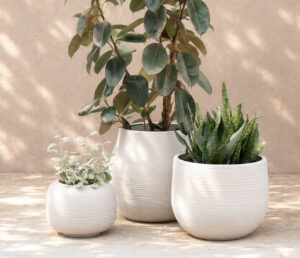
Any of our WG planters can be used as stylish cachepots. Simply place your plant, still in its original nursery pot, inside your favourite planter. This is a great option for indoor styling, making it easy to swap plants, move them outdoors for a thorough watering, or refresh your display with the seasons.
For added protection indoors, place a small saucer beneath the nursery pot to catch any excess water and help protect floors and furniture.
Handy Styling Tip: If your plant sits too low inside the planter, use one or more upturned plastic pots or lightweight containers in the base to raise it to the ideal height, just below the rim of the planter. To create a finished, professional look, conceal the nursery pot with decorative coconut fibre, preserved moss, artificial moss, pebbles, or bark mulch.
It’s a simple, practical way to enjoy the beauty of a feature planter without the need for repotting.
MONA TANKS
Mona Tanks are a simple and effective way to reduce watering frequency while helping to maintain consistent soil moisture. Positioned near the base of the planter, the tank creates a hidden water reservoir that allows plants to draw moisture as needed through a central capillary chamber filled with peat moss.
Simply place the Mona Tank in your planter, add peat moss to the capillary chamber, then fill and plant as you normally would. Water is added through the filler tube and stored within the reservoir, where it is gradually absorbed by the surrounding soil and plant roots.
For best results, avoid overfilling the tank. Once the reservoir reaches capacity, excess water can overflow below the soil surface, potentially leading to overly wet conditions and root stress. Always monitor moisture levels and adjust watering to suit your plant’s needs.
Mona Tanks are particularly effective when used in fully sealed planters, like our Serralunga planter collection, where water remains contained within the planter without leaking onto surrounding surfaces.
Want to learn more? Click here to find out more about our Mona Self Watering Tanks.
Going outside?
POT FEET
Pot feet are one of the simplest ways to improve the longevity and performance of your planter. By slightly elevating the pot underneath, they allow excess water to drain freely and improve airflow beneath the planter, helping to create healthier growing conditions for your plants.
For larger planters and rectangular troughs, pot feet should be positioned evenly around the perimeter and supported through the centre to ensure the weight is distributed correctly.
Avoid placing planters directly onto trays, saucers, artificial turf or any surface where water can become trapped beneath the pot. Prolonged contact with standing moisture can cause water to wick back into the planter, potentially leading to staining, surface damage and premature deterioration over time.
Our pot feet are designed to be discreet, tucking neatly beneath the planter so they remain virtually hidden without detracting from the overall look of your plant pot.
Want to learn more? Click here to view our Pot Feet Guide and sizing recommendations.
For additional planting advice, installation tips and the do’s and don’ts of caring for your WG planter, view our Warranty & Installation Guide here.
CREATE A DRAINAGE LAYER
Creating a drainage layer in the base of your planter is an important step in promoting healthy root growth and long-term plant success. We recommend filling the bottom 20–25% of the planter with expanded clay balls, gravel, scoria or pre-washed blue metal before adding a layer of filter fabric and premium quality potting mix.
This drainage layer helps excess water move freely through the planter, reducing the risk of waterlogged roots while improving filtration and producing cleaner drainage water. The voids between the clay balls or gravel can also help retain small reserves of moisture, providing additional support for plants during hot weather.
For even better moisture retention, consider incorporating peat moss into your potting mix. Peat moss acts like a sponge, helping to hold water and release it gradually to plant roots, reducing watering frequency and creating a more stable growing environment.
A well-prepared planter means healthier plants, stronger root systems and easier ongoing maintenance.
FILTER FABRIC
Placed between your drainage layer (such as clay balls or gravel) and the potting mix above, filter fabric acts as a barrier that allows water to pass through while keeping soil particles in place. This helps reduce discoloured runoff, prevents potting mix from washing into the drainage layer, and retains valuable nutrients where your plants need them most.
A simple addition that helps keep your planter cleaner, healthier and performing at its best